Have you ever wondered what makes the best ghee in India? Is it the quality of the milk, the food cows eat, or the traditional way of preparing it?
For us, the answer begins in the mountains of Himachal Pradesh.
In Himalayan villages, cows can graze on fresh green grass and a variety of seasonal plants and herbs. The natural vegetation changes with the seasons, offering different types of fodder throughout the year. Along with proper care and access to clean drinking water, this plays an important role in producing good-quality milk.
Mountain regions also have natural springs and streams, which can provide clean water when protected from contamination. However, water quality depends on the local source and conditions.
But good milk is only the beginning. How that milk is turned into ghee matters just as much.
This is where the traditional Bilona method comes in, a process that has been followed in Indian households for generations.
Why Is Himalayan Cow Ghee Considered Special?
The quality of milk is one of the most important factors in making good ghee.
In the Himalayan region, traditional dairy farming is closely connected to village life. Cows may feed on fresh grass, seasonal vegetation, and locally available fodder.
What cows eat can influence the composition of their milk, including its fat profile. Their breed, health, and overall care also play an important role.
This is one reason why milk from different regions can vary in flavour and composition.
At Baglat Farms, we source cow milk from the Himalayan region around Rohru, Himachal Pradesh. Our aim is to bring the traditional taste of mountain-made ghee to households across India.
We believe that good ghee begins with good milk, followed by careful preparation.
The Traditional Himalayan Method
If you have grown up in an Indian household, you may remember how ghee was traditionally prepared at home.
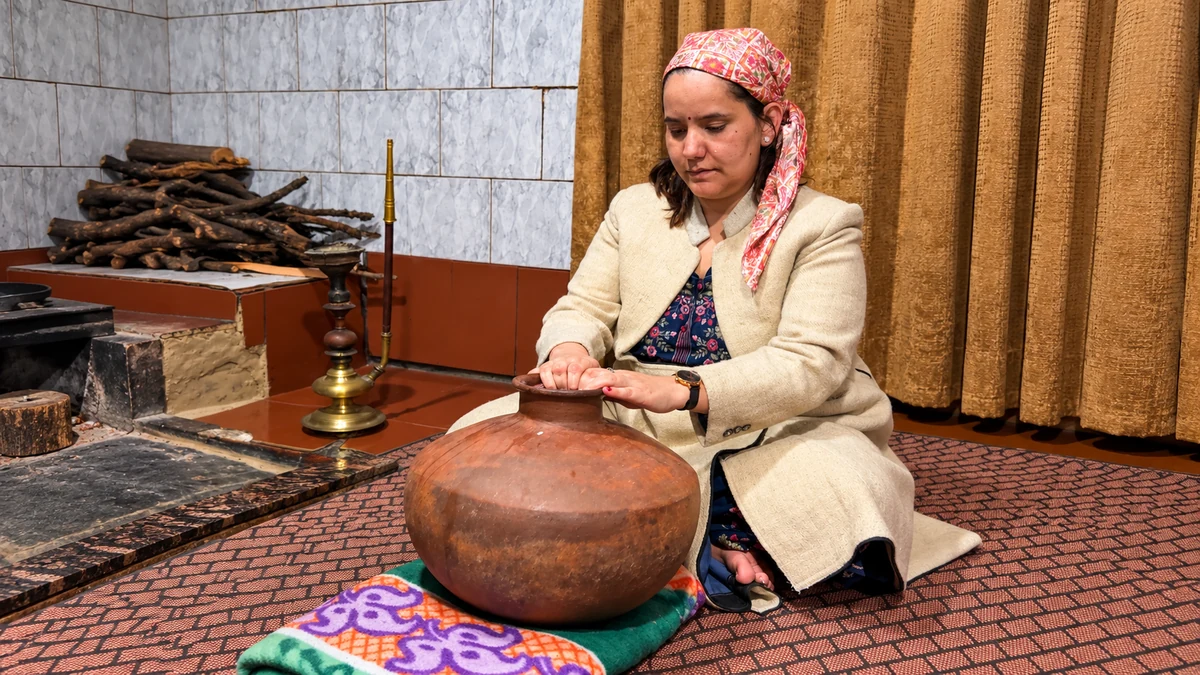
Milk was boiled, allowed to cool, and set into curd. Traditionally in Himachal, the curd was churned in a clay pot by moving it back and forth to collect butter, which was slowly heated to prepare ghee.
This curd-first Himalayan method is different from making ghee directly from separated cream. The clay pot, the steady back-and-forth churning, and the slow clarification give Himachal ghee a distinct taste and aroma rooted in the region’s food traditions.
At Baglat Farms, we honour this curd-first tradition using the Bilona method rather than a clay pot. The butter is then slowly clarified to develop the aroma and flavour we look for in our ghee.
This process takes time and attention, but it helps develop the familiar aroma and rich flavour associated with traditionally prepared ghee.
- Fresh cow milk: We begin with cow milk sourced from the Himalayan region.
- Preparing the curd: The milk is heated, cooled, and cultured to set into curd.
- Traditional churning: At Baglat Farms, the curd is churned using the Bilona method to separate the butter.
- Slow heating: The collected butter is gently heated until the water evaporates and the milk solids separate.
- Filtering and packing: The finished ghee is filtered and carefully packed.
How to Choose the Best Ghee in India
With so many ghee brands available today, choosing the right one can be confusing.
Some products focus on traditional preparation, while others highlight the breed of cow, geographical origin, or nutritional composition.
But when searching for the best ghee in India, there are a few important things worth checking.
Know Where the Milk Comes From
Good ghee starts with good milk. Look for brands that clearly explain where their milk is sourced and how the animals are raised. The cow’s diet, health, and living conditions can influence milk quality.
Understand How the Ghee Is Prepared
Traditional Bilona ghee is prepared through a curd-first churning process. Conventional cream-based methods can also produce good-quality ghee, but the preparation process is different. If you prefer traditional Indian methods, Bilona ghee may be a good choice.
Check the Ingredients
Pure cow ghee should contain milk fat derived from cow milk, without added vegetable oils or artificial ingredients. Always check the ingredient list and product information before buying.
Look for Transparency and Food Safety
A trustworthy ghee brand should provide clear information about the manufacturer, FSSAI licence, packaging, batch details, and shelf life. These details help customers make informed decisions.
Choose According to Taste and Cooking Needs
Good ghee should have a pleasant, characteristic aroma and flavour. Whether you use it for everyday cooking, preparing traditional sweets, or adding a finishing touch to dal and rice, choose a ghee that suits your preferences.
Why We Follow the Traditional Bilona Method at Baglat Farms
For many families in Himachal Pradesh, making ghee has been part of everyday life for generations.
It was not simply about producing a cooking ingredient. It was a way of using milk carefully and preparing food at home.
At Baglat Farms, we wanted to continue this connection with our roots.
Our Himalayan Bilona Cow Ghee is made using the traditional curd-first method, with no added vegetable oils, artificial colours, flavours, or preservatives.
We believe that customers should know where their food comes from and how it is prepared.
That is why we focus on the source of our milk, the preparation process, and keeping our ingredients simple.
Himalayan Bilona Ghee in Everyday Indian Cooking
In India, ghee has always been more than just a cooking fat.
Think of hot rotis with a little homemade ghee, dal served with ghee tadka, or suji halwa prepared during festivals.
These are familiar flavours in many Indian homes.
Himalayan Bilona Ghee can be used in the same way.
You can add it to dal, rice, khichdi, parathas, homemade sweets, or use it for sautéing and roasting.
Ghee is a concentrated source of fat and energy, so it is best enjoyed in appropriate quantities as part of a balanced diet.
For us, its appeal is not about making extraordinary health claims. It is about traditional preparation, familiar taste, and knowing what goes into the food we eat.
Is Himalayan Bilona Ghee the Best Ghee in India?
There is no single answer because the best ghee depends on what matters most to you.
Some people prefer ghee made from a particular cow breed. Others look for traditional preparation, transparent sourcing, natural flavour, or good value.
Himalayan Bilona Ghee is worth considering if you appreciate mountain-sourced milk and the traditional curd-first method of making ghee.
However, the Himalayan origin alone does not automatically make ghee superior to every other product. Milk quality, hygienic processing, testing, and careful storage remain equally important.
At Baglat Farms, we believe that quality comes from paying attention to these details rather than simply making big promises.
Bringing the Taste of Himachal Pradesh to Your Home
For us, Baglat Farms is about sharing a small part of the place we come from.
The villages, the traditional farming practices, and the familiar flavours of homemade food are all part of our story.
Our Himalayan Bilona Cow Ghee comes from this connection with Himachal Pradesh and our belief in keeping traditional food preparation alive.
Whether you are making a simple dal at home or preparing something special for your family, we hope our ghee brings a familiar taste to your kitchen.
Because good ghee begins with good milk, careful preparation, and respect for tradition.
Frequently Asked Questions
Which is the best ghee in India?
The best ghee in India depends on factors such as milk quality, ingredients, preparation method, food safety, and personal taste. Traditionally prepared Bilona ghee is one option for people who value the curd-first churning method.