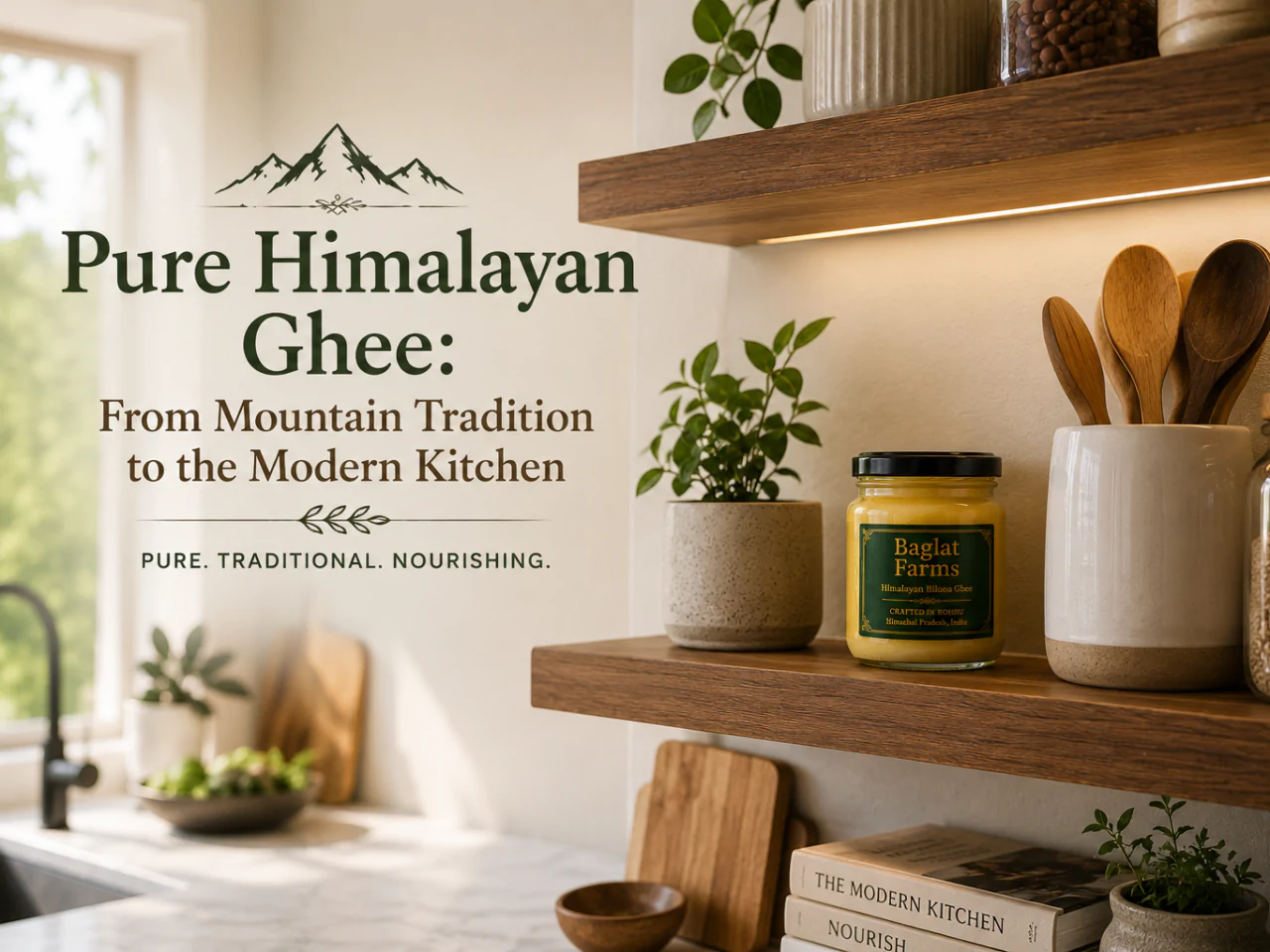
A food shaped by place
Himalayan ghee is more than clarified butter with a place name attached. At its best, it reflects a close relationship between animals, people, pasture, and long-practised food knowledge. Mountain households learned to preserve valuable milk fat by patiently removing moisture and milk solids, producing ghee with a distinctive aroma and excellent versatility in the kitchen.
The word “pure” should stay simple: ghee made from dairy fat without added vegetable oils, artificial colours, or unnecessary ingredients. Geography alone cannot prove purity, so transparent sourcing and careful production remain essential.
Why aroma tells part of the story
Ghee develops much of its character during heating. Researchers using gas chromatography–mass spectrometry found differences in volatile compounds among desi ghee, industrial ghee, butter oil, and butter. That does not make one style automatically superior, but it confirms that raw material and processing choices can influence the aroma we experience.
At Baglat Farms, our goal is to preserve the comforting taste associated with mountain kitchens through small batches, careful clarification, and respect for the ingredient.
Choosing with confidence
Look for a clear ingredient statement, honest information about the cows and their feed, and a producer willing to explain how the ghee is made. Claims such as “Himalayan,” “grass-fed,” and “traditional” are most meaningful when they are supported by traceable practices rather than treated as decorative labels.
Research references
- Evaluation of volatile compounds in different types of ghee using gas chromatography–mass spectrometry. Journal of Dairy Research (2002). View research (opens in a new tab)