Rooted, not romanticised
We respect mountain knowledge while staying honest about the care, work, and consistent standards good food requires.
A journey between Europe and Himachal
Baglat Farms began with a belief: Himachal’s local food traditions already hold remarkable quality. Our work is to bring that heritage forward with the care, clarity, and consistency today’s families expect.
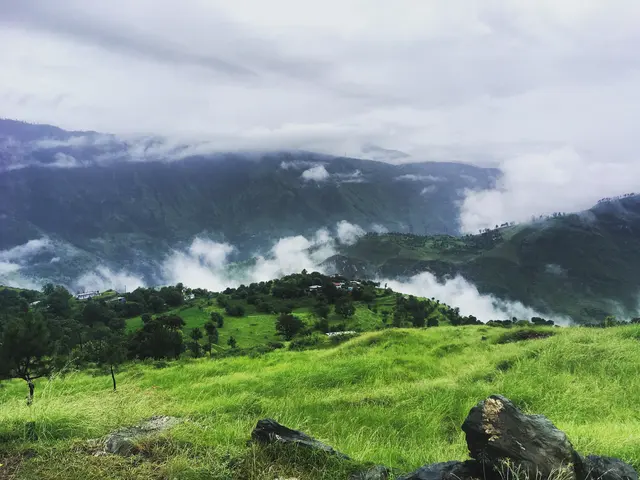
Himachal Pradesh · The landscape behind the idea
Where the idea began
Living and working in Europe reshaped how I thought about everyday food and how deeply our choices can influence a way of life. I learned to look beyond attractive packaging and ask simpler, more important questions: Where did this ingredient come from? How was it made? Can I trust its quality each time I bring it home?
During my PhD research in Artificial Intelligence, I worked with farmers and fellow researchers in Europe to understand how production processes could be evaluated and improved—strengthening quality while helping good products reach the market more efficiently. The experience reinforced a simple lesson: quality is not one final check, but the result of thoughtful decisions made throughout the journey from farm to customer.
Those years away did not make me look farther afield. They made me look home—to Himachal, to the foods I grew up around, and to the practical knowledge held within our mountain communities.
“I realised that the mountains I come from already hold something special: honest ingredients, patient methods, and food knowledge built through generations.”
Rooted in the land
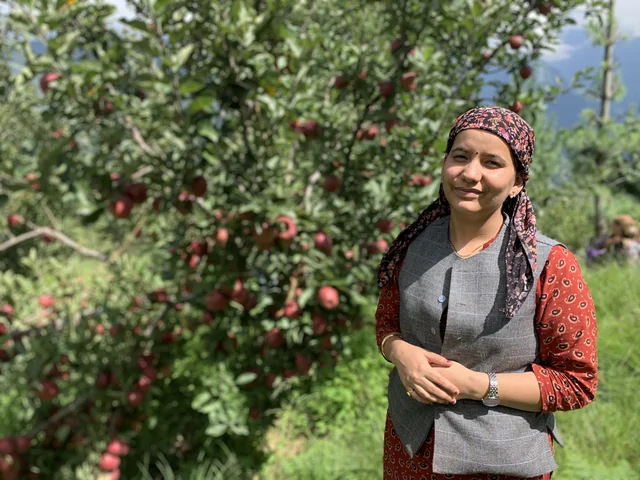
We come from farming families in the hills of Shimla, where farming was simply a part of growing up. Our lives were surrounded by orchards—mostly apples, but also cherries, apricots, and other stone fruits that have been grown in these mountains for generations.
As children, we watched the orchards change with every season. Winter meant waiting and preparing. Spring brought blossom and the hope of a good crop. Summer was about looking after the fruit, and harvest brought the whole family together. We learned early that nature worked on its own timeline.
Farming also taught us that good produce doesn’t happen by chance. A harvest is the result of months of work—pruning, caring for the trees, watching the weather, protecting the crop, and making countless small decisions along the way. Sometimes everything goes as planned, and sometimes one spell of bad weather can change an entire season.
Growing up around this gave us a respect for food that has stayed with us. Behind every good ingredient is a place, a season, and, most importantly, someone who has worked to produce it.
That understanding is at the heart of Baglat Farms. As we bring foods from Himachal to more homes, we want to remain connected to the values we grew up with: respect the land, respect the people who produce our food, and never compromise on its quality.
The bridge we want to build
Across our mountain communities, local foods are shaped by the seasons, a close relationship with the land, and skills refined through everyday practice. We believe these products can serve families across India when their inherent quality is supported by careful sourcing, clean handling, reliable standards, traceability, and honest communication.
Baglat Farms is our attempt to build that bridge—not by changing what makes these foods special, but by presenting them with the consistency and transparency customers deserve.
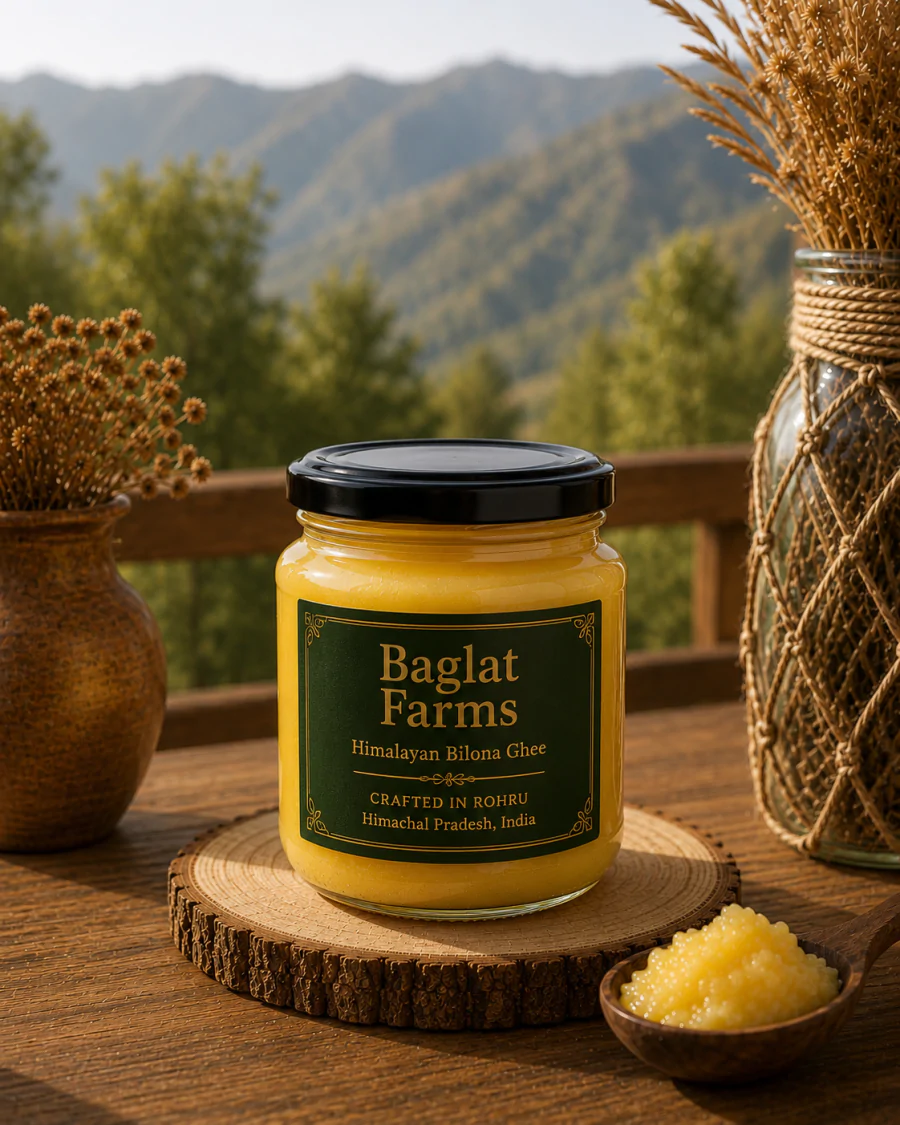
Ghee carries the whole story in one jar: the cows and what they eat, the farms that care for them, and the patient work of turning milk into something lasting. Our cow ghee follows the traditional Bilona method—milk is set into curd, the curd is churned to separate butter, and that butter is slowly clarified in small batches.
What we are building toward
We respect mountain knowledge while staying honest about the care, work, and consistent standards good food requires.
Clear ingredients, a traceable origin, a process we can explain, and no exaggerated promises.
As we grow, we want that growth to create meaningful opportunity for the people whose skill and labour carry these traditions.
This is only the beginning