Grass and seasonal forage
The milk comes from cows in the Himalayan region whose diet includes grass and locally available seasonal forage.
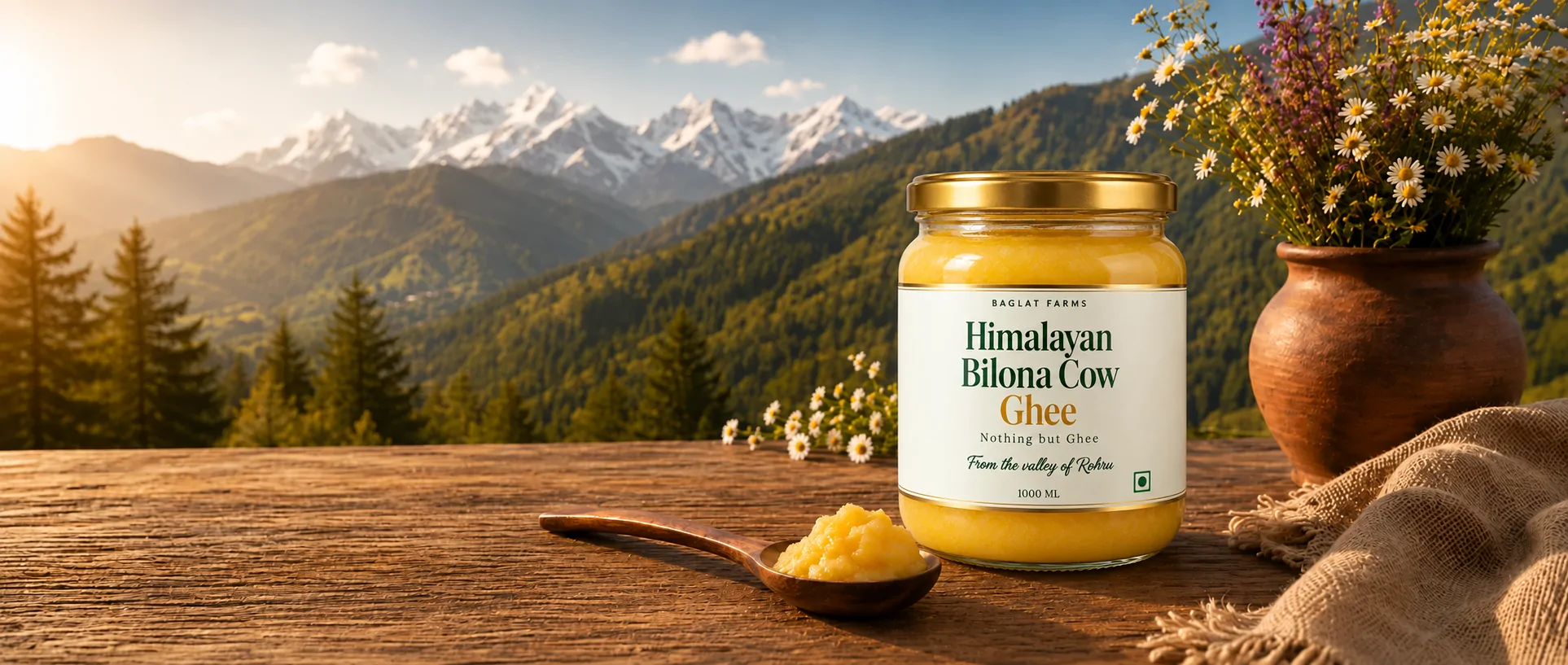
Baglat Farms · Rohru, Himachal Pradesh
We make Bilona ghee in small batches from cow’s milk sourced from Himalayan farms. The method comes from a dairy tradition familiar to our families in Himachal.
Our cows graze on grass and eat locally available seasonal forage. What they eat can shape the composition of their milk, so we pay attention to where it comes from and how it is handled. The high mountain setting is part of our story, alongside the people and care behind every batch.
We make the ghee in small batches, using the Bilona method our families know. It’s a way of carrying familiar food into our own kitchen, with care at each stage.
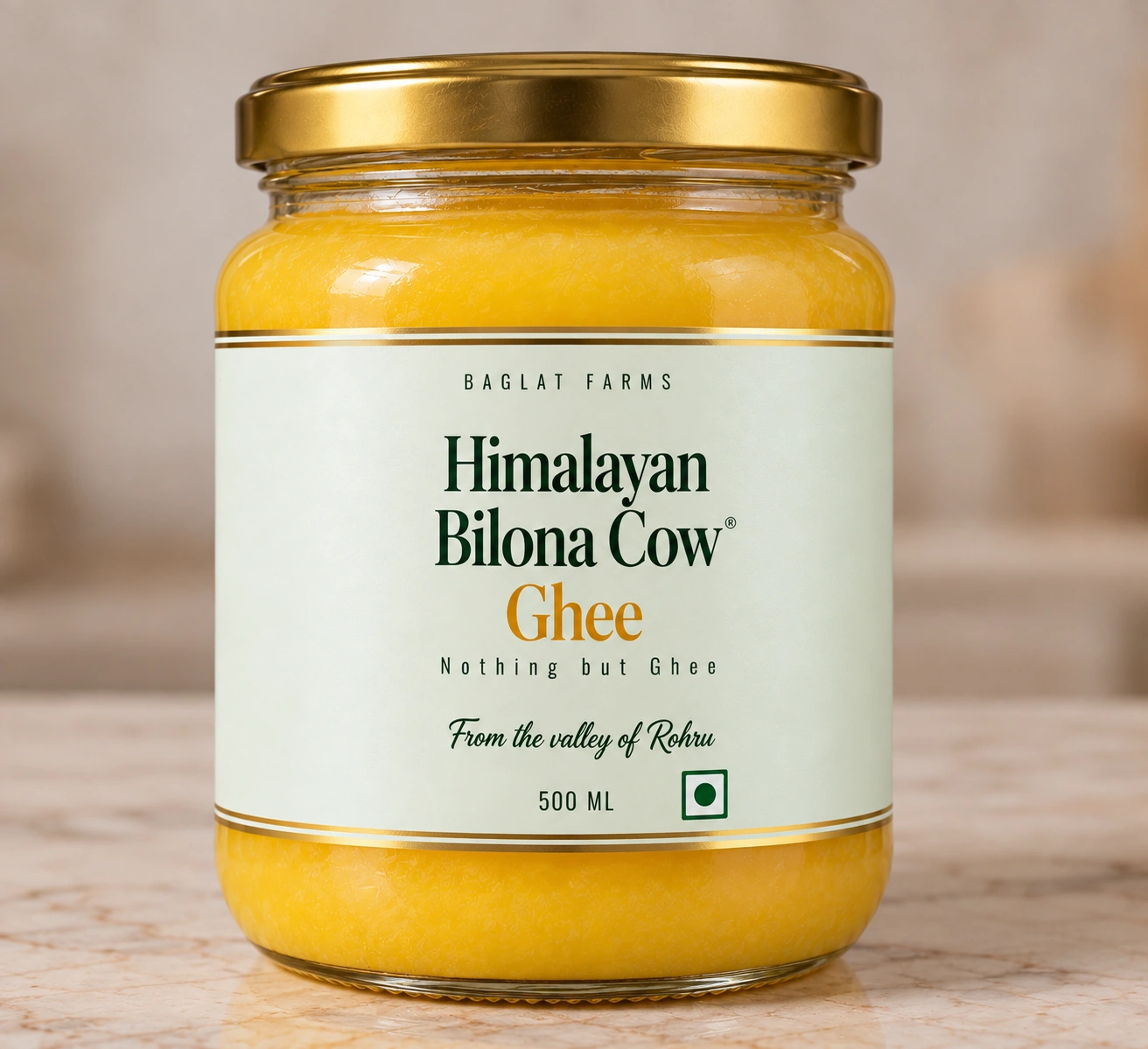
Discover our ghee
We set the milk into curd, then churn the curd to separate the butter. After that, we clarify the butter slowly in small batches, keeping an eye on the heat as its buttery, gently nutty aroma develops.
When I think about this process, I remember sitting beside Dadi during school holidays in Himachal. She would churn butter in a matki, pausing now and then to check how it was coming along. Sometimes she let us have a turn. I can still hear that steady sound.
That memory is part of why we make ghee this way. We can’t recreate those afternoons, but we can bring the same patience and attention to our work today.
Ghee has a long place in Indian kitchens and Ayurvedic tradition. We value that history, while being careful not to mistake traditional use for proof of a medical benefit. For us, ghee is a much-loved food, not a cure.
The milk comes from cows in the Himalayan region whose diet includes grass and locally available seasonal forage.
We set milk into curd, churn the curd to separate butter, then clarify the butter in small batches.
We make our ghee from butter, without added colours or preservatives.